One Young Leader, Millions Inspired: The Journey of Bangladeshi Changemaker Sajib Junaid
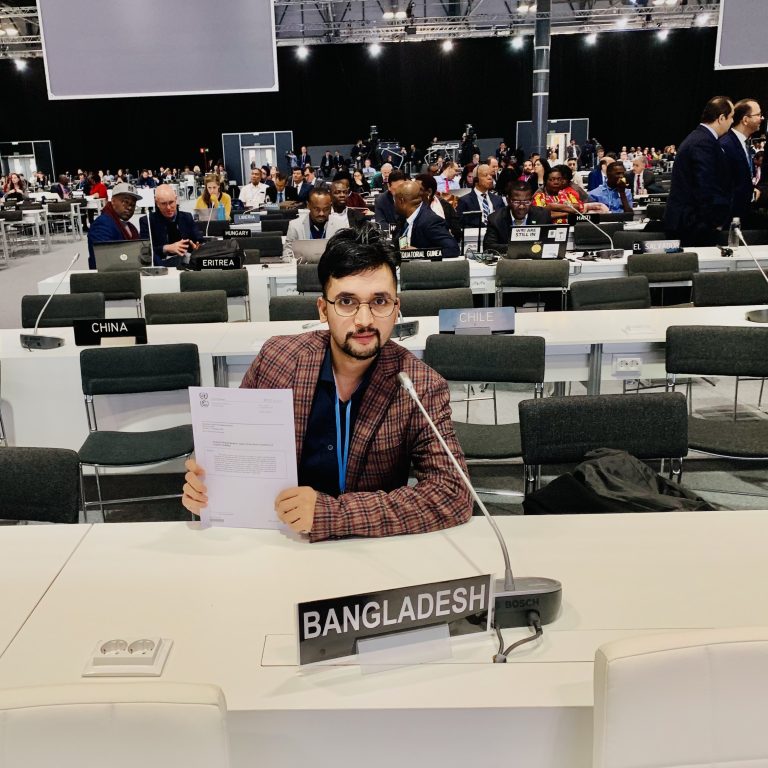
At a time when climate change, mental health challenges, and social inequality continue to shape the future of young people worldwide, a growing number of youth leaders are stepping forward to drive meaningful change. Among them is Md. Sajib Khandokar, widely known as Sajib Junaid, a Bangladeshi youth activist, climate advocate, and human rights campaigner whose journey from the southern district of Barisal to international platforms reflects the power of youth-led action.
For more than 15 years, Sajib has dedicated his life to advancing children’s rights, youth empowerment, climate justice, and sustainable development. Today, based in Germany, he continues to build bridges between local communities and global policy discussions, inspiring thousands of young people to become active citizens and changemakers.
A Childhood Rooted in Activism
Born on 30 December 1994 in Barisal, Bangladesh, Sajib’s commitment to social causes began remarkably early. At the age of 14, he joined the National Children’s Task Force (NCTF), one of Bangladesh’s most prominent child rights platforms.
What started as participation in community activities soon evolved into leadership. Between 2006 and 2011, Sajib served as President of both the district and central committees of NCTF, representing children’s voices on issues ranging from education and child protection to civic participation.
Those formative years laid the foundation for a lifelong mission: ensuring that young people are not merely beneficiaries of development but active architects of social change.
Reflecting on his early experiences, colleagues often describe him as a determined young leader who understood that lasting change begins at the grassroots level.
Education and a Growing Vision
Sajib completed his Secondary School Certificate at S.C.G.M. High School and his Higher Secondary Certificate from Amrita Lal Dey College in Barisal, studying Humanities.
Driven by a keen interest in governance and public policy, he later pursued a Bachelor of Arts in Political Science at Government B.M. College under the National University of Bangladesh.
His academic journey coincided with growing involvement in community development, journalism, youth leadership initiatives, and advocacy campaigns. These experiences deepened his understanding of the interconnected challenges facing young people—from poverty and inequality to environmental degradation and lack of access to opportunities.
Founding International Youth Change Maker
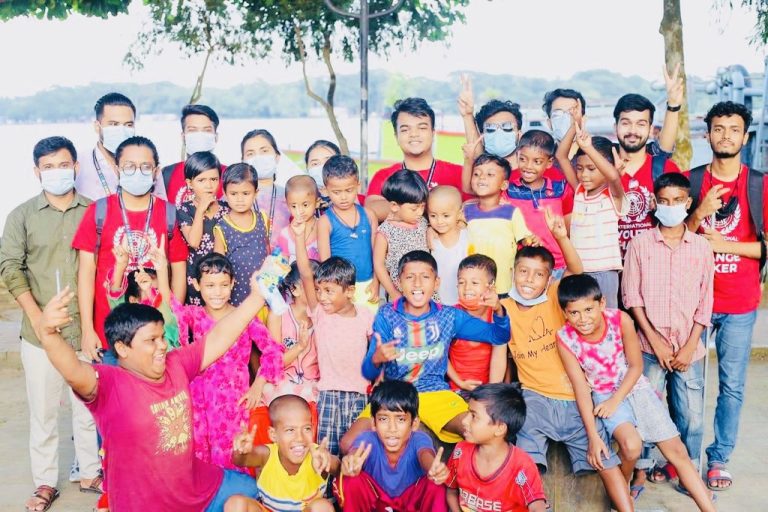
In 2012, at an age when many young people are still discovering their career paths, Sajib established International Youth Change Maker (IYCM).
The organization was founded with a simple yet ambitious vision: to empower young people and create inclusive communities through education, leadership, mental health support, child rights advocacy, and climate action.
Over the years, IYCM has grown from a grassroots initiative into a global youth-led nonprofit network.
According to organizational records, by 2025 IYCM had reached more than one million people through direct programs, awareness campaigns, leadership development initiatives, and environmental activities.
The organization’s impact includes:
- Training more than 86,000 youth leaders;
- Counselling over 7,000 individuals;
- Mobilising more than 50,000 youth changemakers across Bangladesh;
- Establishing over 700 international ambassadors;
- Supporting large-scale environmental campaigns, including the planting of more than 80,000 trees annually.
These achievements demonstrate how youth-led organizations can create measurable impact while addressing some of the world’s most pressing challenges.
Championing Climate Action
Climate change has become one of Sajib’s most visible advocacy areas.
Coming from Bangladesh—a country frequently cited as one of the world’s most climate-vulnerable nations—he witnessed firsthand the effects of floods, cyclones, river erosion, and environmental displacement.
These experiences shaped his belief that climate justice is not only an environmental issue but also a matter of human rights.
Over the years, Sajib has trained more than 10,480 youth climate advocates across 35 countries, equipping young people with the knowledge and leadership skills needed to address climate challenges within their communities.
Since 2015, he has actively supported youth participation in major international climate forums, including the Conference of Youth (COY) and the Conference of the Parties (COP) under the United Nations climate framework.
His advocacy emphasizes several key themes:
- Climate justice and environmental displacement;
- Sustainable development and resilience;
- Youth participation in climate governance;
- Green leadership and community action;
- Environmental education and awareness.
Through workshops, campaigns, and international collaborations, Sajib has consistently advocated for stronger youth representation in climate decision-making processes.
Taking Bangladesh’s Voice to the World
Sajib’s work has brought him to numerous international platforms where he has represented youth perspectives from Bangladesh and the Global South.
His participation includes engagement with:
- United Nations Climate Conferences (COP23 and COP24);
- UN SDG Action Campaign initiatives;
- Fridays for Future Germany;
- European Youth Parliament;
- World Youth Parliament 2019;
- UNICEF Deutschland youth volunteering programmes;
- Plan International youth engagement initiatives.
At these forums, he has spoken about the disproportionate impact of climate change on vulnerable communities, the importance of youth leadership, and the need for inclusive policies that protect children and young people.
Observers note that his advocacy combines grassroots experience with a global outlook—an approach that resonates with diverse audiences across cultures and regions.
Promoting Mental Health and Human Rights
Beyond climate action, Sajib has emerged as a strong advocate for mental health awareness and human rights.
Through IYCM and various partnerships, he has supported programmes that address mental well-being among young people, promote digital safety, and strengthen access to psychosocial support.
In many developing societies, mental health remains heavily stigmatized. Sajib has repeatedly emphasized the importance of creating safe spaces where young people can seek support without fear of discrimination.
His work also extends to child protection, gender equality, youth leadership, and educational rights—areas that remain central to his broader vision of sustainable development.
Recognition at Home and Abroad
Sajib’s contributions have earned recognition from various national and international organizations.
Among the awards and honours attributed to his work are:
- UNICEF Meena Media Award (2009, 2013, 2014);
- Bangladesh Digital Social Innovation Award (2021);
- World Peace Award, Sweden (2022);
- Global Youth Symposia Best Youth Organization Award (2022);
- Global Recognition Award (2024).
While awards are often viewed as milestones, those who have worked alongside Sajib suggest that his greatest achievement lies in empowering young people to take ownership of social and environmental change.
Building Partnerships Across Sectors
Throughout his career, Sajib has collaborated with a range of organizations working in child rights, reproductive health, youth development, and community engagement.
His affiliations include roles and contributions with:
- Save the Children;
- Plan International Bangladesh;
- Family Planning Association of Bangladesh (FPAB);
- Mass-line Media Centre (MMC);
- Youth Parliament of FPAB;
- IPPF Youth Advisory Group on Abortion Stigma;
- Activista Bangladesh under ActionAid.
These experiences have enabled him to work across different sectors while maintaining a consistent focus on youth participation and social justice.
A Global Citizen with Bangladeshi Roots
Today, residing in Germany, Sajib continues to mentor emerging leaders, facilitate international youth networks, and advocate for sustainable development.
Fluent in Bangla, English, German, Hindi, and Arabic, he frequently engages with multicultural communities and global audiences.
Yet despite his international presence, his work remains deeply connected to Bangladesh.
Whether supporting climate-vulnerable communities, promoting children’s rights, or encouraging youth leadership, his initiatives often reflect the lessons learned from his own upbringing and grassroots activism.
Inspiring the Next Generation
The story of Sajib Junaid is ultimately a story about possibility.
It demonstrates how a young person from a district town in Bangladesh can rise to influence conversations on climate action, human rights, and youth empowerment at the global level.
At a time when young people face unprecedented challenges—from environmental crises to social uncertainty—his journey offers an important reminder: meaningful change often begins with local action, persistence, and a willingness to serve others.
As the world looks increasingly to youth for innovative solutions and fresh perspectives, leaders like Sajib Junaid represent a generation determined not only to imagine a better future but to help build it.
For thousands of young people across Bangladesh and beyond, that may be his most enduring contribution.