Women in Leadership: My Incredible Experience as a Youth Leader from Nepal to Mongolia
Still reflecting on the learning from “Women in the Front-line Addressing Global Challenges conference”. In April 2023, I had an incredible opportunity to participate in the “Women in the Front-lines Addressing Global Challenges” high level event held in Ulaanbaatar, Mongolia. Organized by Soc Dem Asia, Friedrich-Ebert-Stiftung and the Academy of Progressive Politics. What made it even more special was it brought together global leaders, policymakers, youth delegates and women in leadership roles from Southeast Asia. This annual event is the platform for delegates to discuss the progress made and share strategies for advancing women’s leadership, promoting gender equality, and addressing pressing global issues such as climate change and digital rights.
Introduction to the Women in Leadership
On April 19, 2023 I along with two other female leaders headed on our journey to Mongolia as female participants from Nepal. The conference was held from 19th to 24th April 2023. The conference hosted delegates from ten East Asia-Pacific countries, including 25 representatives who actively participated in discussions on women’s leadership. The theme, “Women in the Front-lines,” revolved on how women are tackling global challenges such as climate change, digital rights, and geopolitical issues, while also highlighting the need for feminist foreign policies and greater participation of women in politics and the labor market.
During the program, Ann Linde (former Foreign Minister of Sweden), Battsetseg Batmunkh (Foreign Minister of Mongolia), Vanessa, Fatemeh, Bulgantuya , Jannie, Maitet, Ingrid Bicu, Jenny, Kath, Nandini were the speakers. These inspiring women leaders highlighted the importance of increasing women’s involvement in politics to embrace gender equal society and sustainable development.
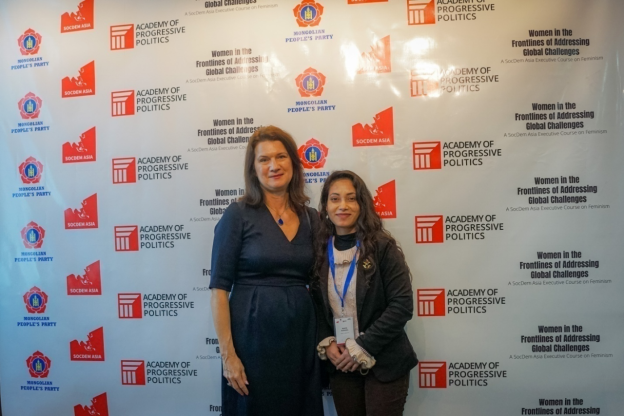
Objectives of Women on the Front lines
The general objective of the program was to emphasize the importance of collaboration and partnership in advancing;
– Implementing Feminist Foreign Policy: Challenges and Opportunities
– Women’s Experiences and Perspectives in Conflict and Post-Conflict Settings
– Feminist Approaches on Climate Action Lessons from the Global South
– Feminist Perspectives on AI Development and Digital Rights
Discussions on Women’s Leadership and Global Challenges
The major discussion of the conference was the increasing instability in global politics and the ongoing challenges women face in achieving political representation. Despite legal frameworks designed to promote gender equality, many political parties lack the will to fully implement these policies. Women in rural areas, face several challenges such as limited resources and access to education and employment opportunities, which limit their ability for their politics.
While some countries like New Zealand have made significant progress towards gender parity, many others still struggle. One of the key takeaways from the conference was the critical role that partnerships between governments, non-governmental organizations (NGOs), and local communities play in achieving gender equality and sustainable development. I was deeply inspired by the discussions surrounding the empowerment of women in digital spaces and the need to bridge the digital divide, especially as AI and technology rapidly evolve. This conversation was especially for women in the Global South, where access to digital resources is often limited.
Feminist Approaches to Global Issues
During the conference, workshops and panel discussions addressed several of the United Nations’ Sustainable Development Goals (SDGs), with a focus on Goals 4 (Quality Education), 5 (Gender Equality), 9 (Innovation and Infrastructure), 11 (Sustainable Cities and Communities), 13 (Climate Action), and 17 (Partnerships for the Goals). These discussions revolved around the intersection of gender equality with global development challenges and highlighted the role of young female leaders as agents of change.
One of the most memorable and exciting moments of the conference was our visit to Mongolia’s The State Great Khural (Parliament house), where we had the opportunity to meet with Members of Parliament, Ministers and Government leaders. This experience offered invaluable insights into Mongolia’s political system and provided us with a platform to engage in meaningful discussions on gender equality and sustainable development. After completing parliamentary discussions, we had the opportunity to explore a Mongolian cultural show in front of the Parliament House and Museum.
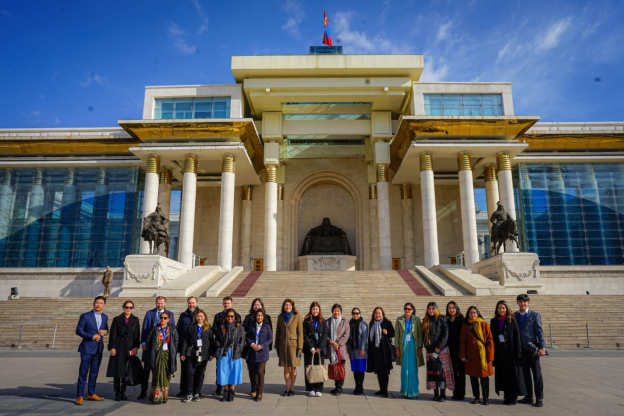
Feminist Perspective in Policy, Climate Action, and Digital Rights
The conference sessions covered a diverse range of important topics. In one of the sessions titled “Implementing Feminist Foreign Policy”, the focus was on the challenges and opportunities associated with advancing women’s leadership in politics, particularly in conflict and post-conflict settings. Vanessa Chong- (the Regional Director of Fortify Rights), and Fatemeh Haghighatjoo- (the CEO of the Non-violent Initiative for Democracy), shared powerful stories of women navigating political landscapes in conflict zones. They stressed the need for feminist approaches to conflict resolution, which often prioritize peace-building and social justice.
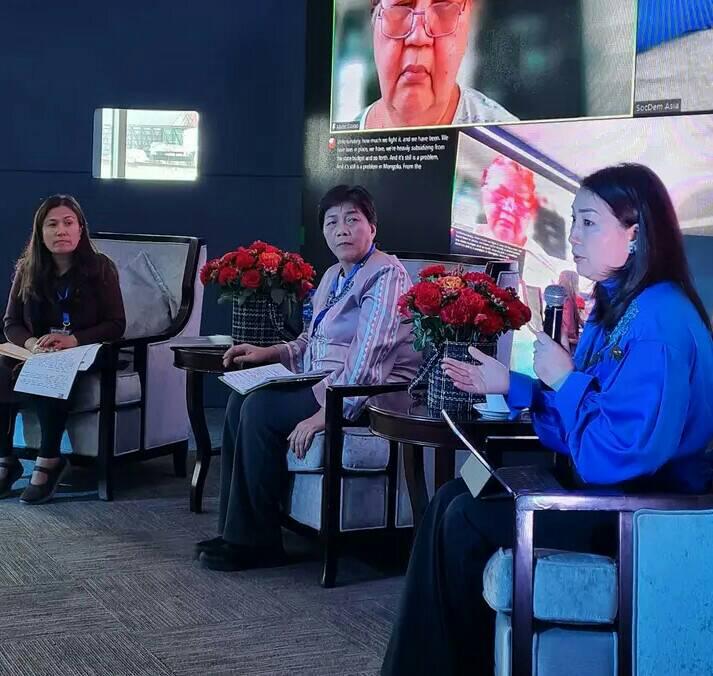
Another session, “Feminist Approaches to Climate Action”, focused on how women in the Global South are leading the fight against climate change. The discussion elaborated on the challenges women face in climate-related work, such as limited access to resources and the disproportionate impacts of climate disasters on women. Yet, women’s leadership in local, community-driven climate solutions was recognized and deeply appreciated.
The role of digital rights and AI was also a significant theme. Experts like NgIrid Bicu and Jenny Domino led discussions on how feminist policies can ensure equitable AI development and safeguard women’s rights in digital spaces. As we continue to navigate the digital age, these discussions feel particularly urgent and necessary.
Insights and Reflections
The “Women in the Front-line” conference provided a platform for thoughtful discussions, knowledge sharing, and collaboration for personal and professional growth. It reinforced the importance of evidence based policy making, effective implementation of the SDG’s and ensuring that women’s leadership is at the forefront of global decision-making processes.
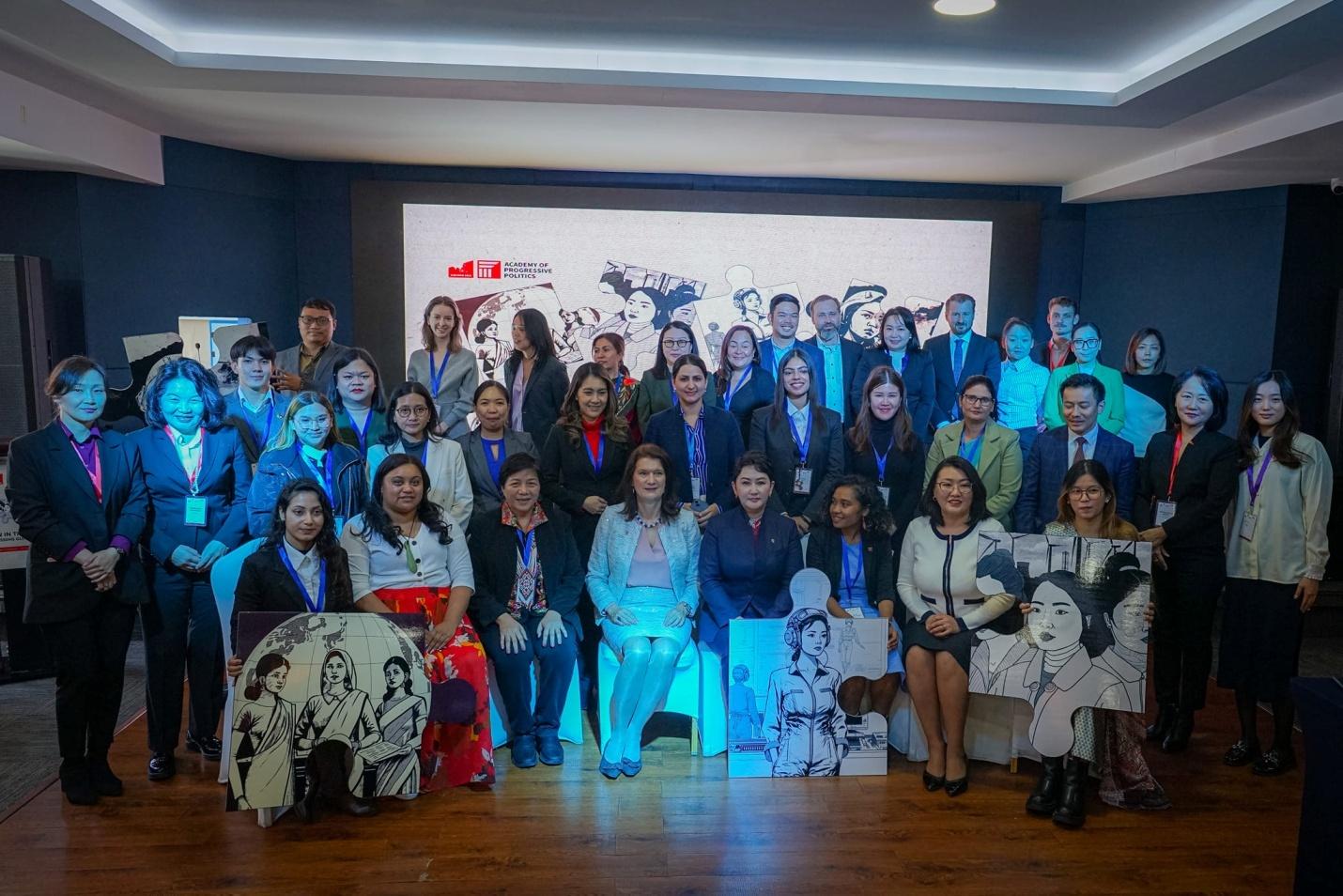
Building on this, the conference was highly transformative. It was a very proud moment for us as it highlighted the global connections we were building in Mongolia and the pride we felt in representing our country Nepal on an international platform. As a youth representative, I have deepened my understanding of how global negotiations unfold, how to shape discussions, and how to drive real influence (and I am still learning). Witnessing the engagement of female leaders has reaffirmed my belief that young women must not only participate in leadership but must also take the lead.
It not only deepened my understanding of the challenges women face in leadership roles but also strengthened my resolve to continue advocating for gender equality, especially in the context of climate action and digital rights. I left Mongolia with a renewed commitment to advancing these causes in Nepal and beyond, recognizing that localized, community-driven solutions are essential to achieving sustainable development.
Conclusion
Returning from Mongolia, I carry these experiences with a renewed sense of purpose. As someone passionate about Climate Action, women empowerment and leadership, the discussions, connections, and insights gained during the conference will continue to shape my journey as a young leader committed to tackling global challenges through education, mentorship and policy engagement at both national and global stages. The world needs more women at the table, not just as participants, but as diplomats, researchers, storytellers and decision makers with diverse ideologies to built more sustainable and just world for all.
One key lesson I learned from this platform was that how to build a leadership brand by turning knowledge into an action for long-term change grounded in compassion, empathy, and collective intelligence and that women’s leadership is essential to achieving sustainable development. Yet, I recognize that, getting access at the decision making level is still a privilege and many visionary women are left out due to financial and systemic barriers.
Another inspiring takeaway was while involve in discussion with fellow delegates, especially young leaders who had already begun their political leadership in their early 20s, some even serving as parliamentarians. They were well informed about their national policies, actively engaged in policy discussions, and eager to learn from other countries. Countries like New Zealand, Malaysia, Mongolia, Thailand is giving chance to youths and women to take leadership roles. In fact, New Zealand has more than 50% women participating in decision making level and leading their nation.
This made me think deeply: When will Nepal gives the same opportunity to the youths and women? Many young Nepalese are asking the same question: How long must we wait to lead and be involved in decision making that defines our nation’s future?
This must change,
Now, the country demands a generational shift in leadership from traditional politics to new leaders with bold and innovative visions. To build a better future for our country, we must begin by empowering Nepalese youth especially young women by ensuring their meaningful participation in political, social, and economic spheres, to lead, amplify unheard voices, and challenge systems that exclude.
The government must open doors that have long been closed by investing in STEM education, supporting youth-led initiatives, and promoting policy mentorship and leadership development because youth and women’s vision, energy, and resilience are exactly what our future needs.
Together, we must change the landscape of leadership where every voice is heard, every perspective is valued, every story matters, and every young woman has the power to rise.
Author (Maya Kandel is an Environmental researcher, Climate educator and Activist from Nepal. Currently serving as the International Youth Change Maker (IYCM) Ambassador to Nepal (2024-2025) and 2023 cohort Member of the U.S. Embassy Youth Council, Nepal)