From Bangladesh, a Youth Movement Grows: How IYCM Is Reshaping Grassroots Activism .
In a world facing climate upheaval and social unrest, a youth-led organization born in Dhaka is quietly building one of the most ambitious networks of changemakers anywhere.
— On a sweltering afternoon in Narayanganj, just outside the capital, a group of teenagers gather under a corrugated tin roof to plan their next tree-planting campaign. They’re part of a larger force — a grassroots movement that began with a few volunteers and now spans 70 countries.
The movement is called the International Youth Change Maker (IYCM), and over the past decade, it has quietly become one of the most influential youth-led platforms for sustainable development in the Global South.
Founded in 2012 by a group of university students in Bangladesh, IYCM has grown into a network of more than 50,000 young changemakers and 700 global ambassadors, tackling issues ranging from climate justice to gender equality, mental health, and child protection. Its reach is global, but its ethos remains distinctly local.
“We weren’t waiting for permission to start,” said Sajib Khandokar Junaid, 31)who co-founded the organization. “We saw what wasn’t working, and we began building from the ground up — with youth leading the way.”
A Different Kind of Development Model
While many international NGOs operate from the top down, IYCM flips that model on its head. Its programs are designed and implemented by local youth — many from the very communities they serve. This, Mr. Junaid argues, is key to long-term impact.
“Development shouldn’t be something that happens to communities,” he said. “It should come from within them.”
That principle guides initiatives like Mind Care, a mental health program that trains teenagers to offer peer support and psychological first aid, and My Body, My Right, which educates young people — especially girls — about reproductive rights and bodily autonomy in regions where such topics remain taboo.
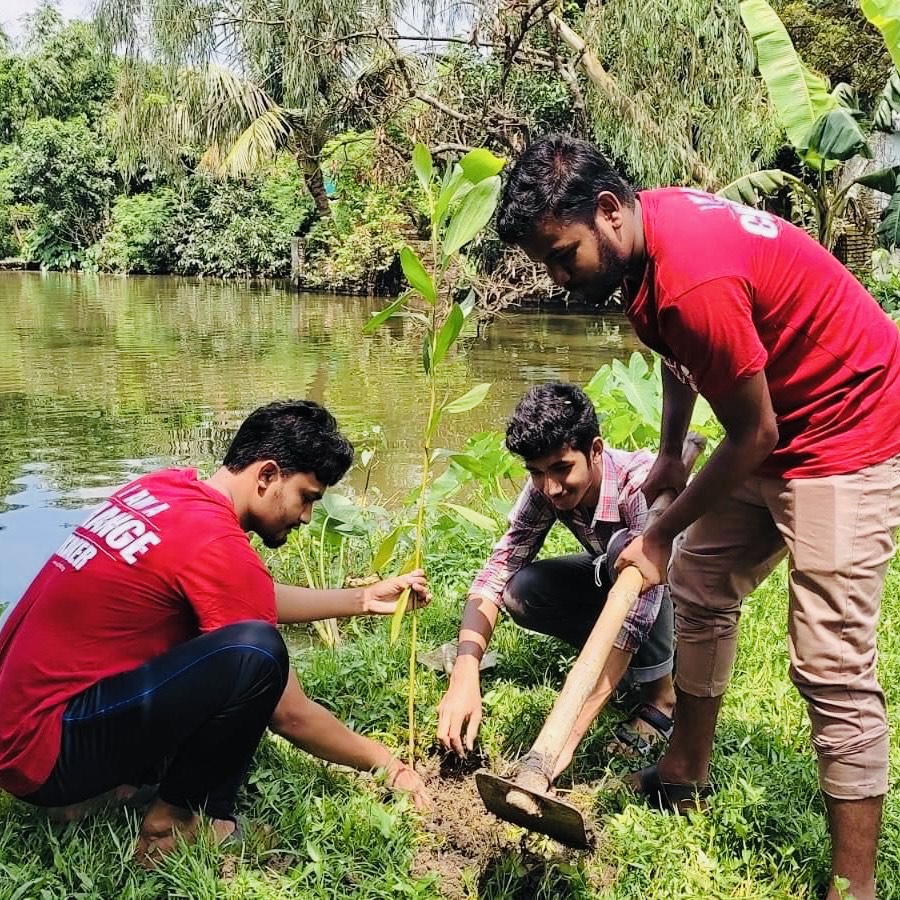
Another program, Climate Justice Now, mobilizes thousands of young people across Bangladesh to plant saplings, monitor river pollution, and advocate for environmental protections. The organization reports planting over 80,000 trees annually, and training more than 86,000 youth leaders since its inception.
Beyond the Numbers
By IYCM’s count, its programs have impacted more than 1 million people — a figure that includes 803,077 direct beneficiaries. During the COVID-19 pandemic, the group launched its Corona Tackling Youth Action campaign, distributing food and protective equipment in low-income communities when larger aid agencies struggled to meet demand.
But the numbers only tell part of the story.
In the northern district of Rangpur, 17-year-old Mehjabin was once at risk of child marriage. After participating in an IYCM-led education workshop, she not only returned to school but began teaching literacy classes for younger girls in her village.
“They taught me I had a voice,” she said. “Now I want to help others find theirs.”
Recognition and Roadblocks
The organization’s impact has not gone unnoticed. IYCM has received multiple accolades, including the UNICEF Meena Media Awards, the Bangladesh Digital Social Innovation Award, and most recently, a Global Recognition Award in 2024. International development agencies now look to IYCM as a case study in effective, youth-driven intervention.
Yet, the organization still grapples with challenges familiar to grassroots groups: limited funding, political resistance, and the uphill task of shifting cultural norms around gender and youth leadership.
Labiba Sultana, a co-founder and advocate for gender equity within the movement, said the work often means challenging entrenched attitudes.
“In Bangladesh, girls still struggle to be heard — not just in politics or business, but in their own homes,” she said. “We’re showing that leadership can start early, and it can start anywhere.”
A Vision for 2030
With just five years left to meet the UN’s Sustainable Development Goals, IYCM is pushing forward with a bold agenda: to make Bangladesh a global model for youth-led, climate-resilient, gender-equitable development.
They continue to collaborate with UNICEF, regional climate forums, and global youth summits. Yet their deepest investment remains in the communities where it all began — with the young people who now teach, plant, build, and lead where once they were told only to follow.
“In every child we train, in every village we reach,” said Mr. Junaid, “we’re planting more than just trees or ideas — we’re planting futures.”
In a world where youth often struggle to be heard, IYCM is proving that sometimes, the most radical change comes from the youngest voices.